How To Choose The
Right Cleaning Supplies
For Your Commercial
Coffee Machine
Most off-tasting espresso isn't caused by the beans alone. Coffee oils cling to group heads, portafilters, steam wands and grinder burrs, and within days they turn rancid. That stale, bitter edge creeping into your shots? It is almost always residue left behind from the last hundred extractions, and the kind a proper backflush at close would have prevented.
For any café, the cleaning routine sits alongside sourcing good coffee and training staff as a core part of daily operations. Get it right, and your drinks stay consistent, your machine runs longer between services, and you pass your food hygiene inspections without a scramble. Get it wrong and a Monday-morning health inspection becomes a very uncomfortable conversation.
This guide covers what to clean, which products to use and how to build a routine that keeps espresso and bean-to-cup machines performing at their best.
Key Takeaways
-
Coffee machines accumulate two types of deposit, coffee oils and limescale, and each needs a different product: an alkaline detergent for oils, an acidic descaler for scale.
-
Commercial espresso machines need daily backflushing with a dedicated detergent, while bean-to-cup machines rely on automatic cleaning cycles, brew unit rinsing and milk circuit maintenance.
-
Descaling frequency depends on your local water hardness; monthly is a sensible baseline in hard-water areas, less often in soft-water regions.
-
A small, focused cleaning kit that includes detergent, descaler, grinder tablets, brushes, cloths and a food-safe sanitiser covers most commercial machines without overbuying.
-
Build a documented daily, weekly and periodic routine so nothing gets missed, staff know what to do, and hygiene inspections go smoothly.
The Build-Up You Are Actually Cleaning
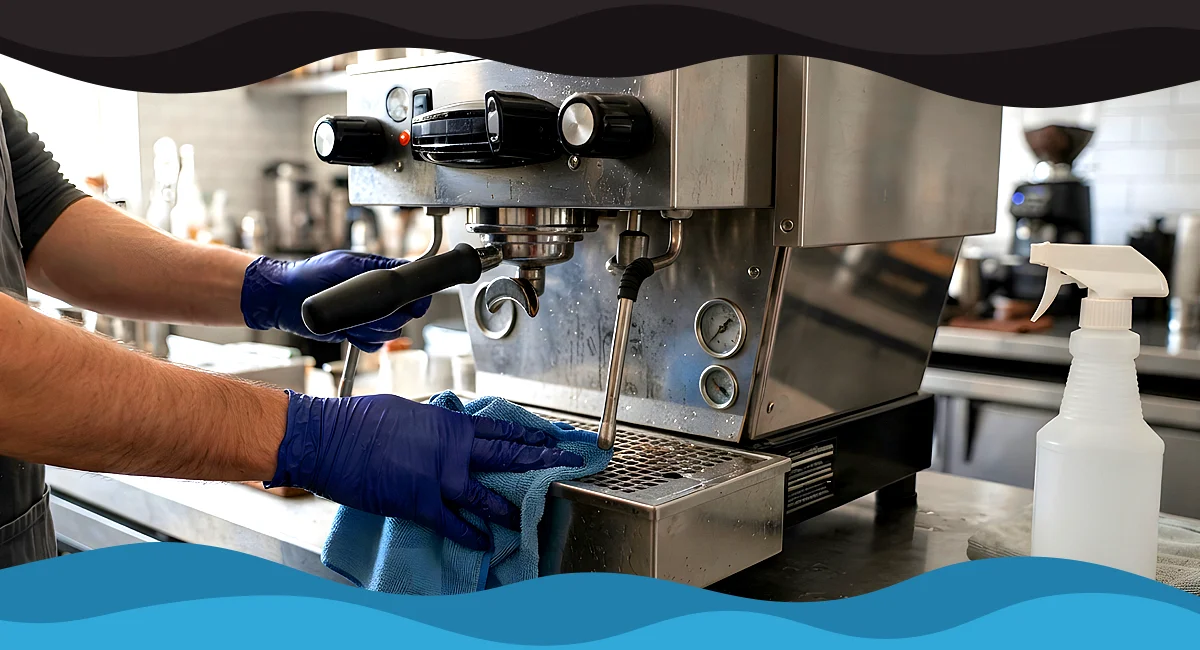
Two very different types of deposit form inside a coffee machine, and each needs a different product. Most cafés need both, along with a set of general cleaning essentials for surfaces, accessories and hands.
Coffee Oil & Grounds
The first is coffee oil and grounds. Every shot pushes oils through the group head and portafilter. These are fatty, so water alone will not shift them. You need an alkaline detergent, usually an espresso machine cleaning powder or tablet, designed to break down organic matter.
Limescale
The second is limescale. In hard-water areas, calcium and magnesium build up inside the boiler and pipework. Water above roughly 200 mg/l (200 ppm) is generally classed as hard, which covers much of southern and eastern England; you can check where your area sits using the Drinking Water Inspectorate's water hardness guide or your local supplier's hardness map. Scale is a mineral deposit, so it needs an acidic descaler to dissolve it. Using a detergent on scale, or a descaler on oils, achieves very little.
Cleaning an Espresso Machine
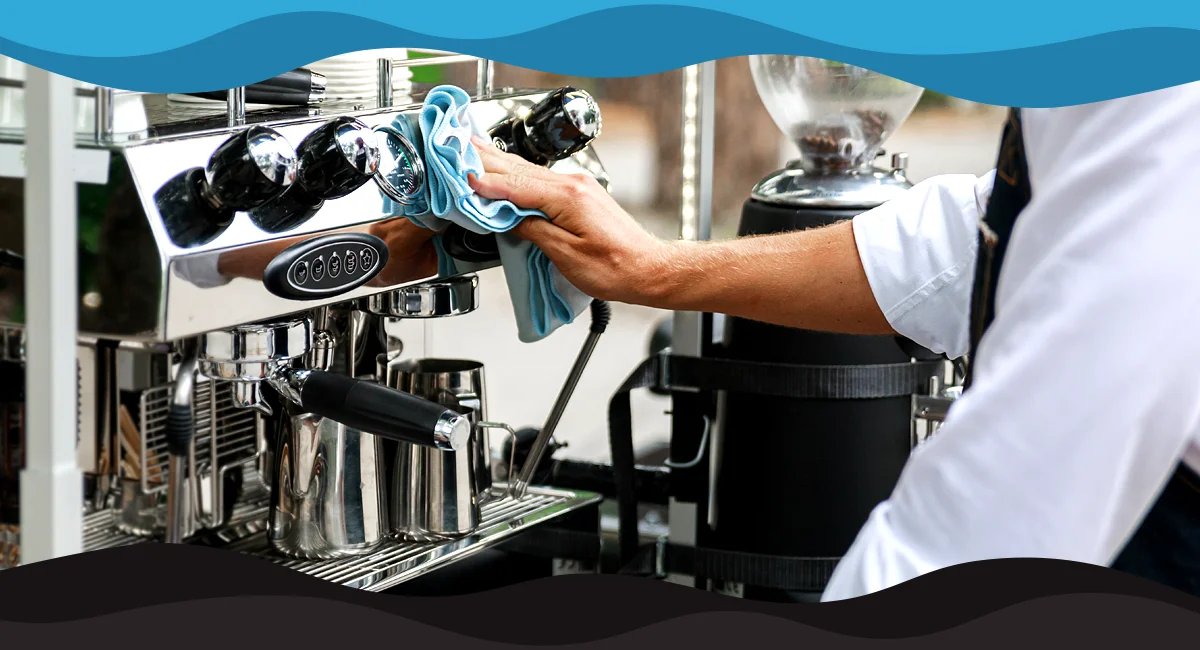
Espresso machines accumulate both types of deposit, coffee oils and grounds plus limescale, and a solid routine has to tackle them all.
Browse Espresso Machine Cleaning ProductsDetergents for Daily Backflushing
If you run a machine with a three-way solenoid valve, backflushing is your most important daily task. Throughout service, run plain-water backflushes between groups to keep things clear. At the end of the day, fit a blind filter into the portafilter, add approximately 3 g of detergent powder per group, and run the pump in five to ten short bursts of around ten seconds each.
This forces cleaning solution back through the group head and flushes out trapped oils. Check your machine maker's guidance on detergent frequency; most recommend once at close, but some models differ.
Buy a detergent made for espresso machines rather than a generic kitchen cleaner. Cheap substitutes can leave residue or corrode metal parts. A tub lasts a long time because you only need a small scoop per clean, so cost per use is low even for busy sites.
Descalers and Water Treatment
In hard-water areas like London and much of the South East of the UK, plan on descaling roughly once a month as a starting point, then adjust based on your machine's performance and your actual local water hardness data.
A café in a soft-water area may only need to descale every few months. Rather than descale constantly, many operators fit a water filter or softener on the mains feed. This slows scale build-up, protects the boiler and keeps taste steady.
When you do descale, follow the machine maker's instructions on dose and dwell time. Most manufacturers recommend a dwell of around 20 to 30 minutes. Check your manual for the exact figure, since leaving descaler in too long can damage seals. Rinse thoroughly afterwards, then pull and discard a few shots before serving.
Group Head Brushes and Cloths
Small tools do a lot of work. A stiff nylon group head brush clears grounds from the shower screen and the gasket seat, where oils gather. Keep separate colour-coded cloths for different jobs: one for the steam wand, one for surfaces, one for the drip tray. This stops milk residue ending up where it does not belong and supports a clear hygiene system.
Microfibre cloths work well because they grip fine particles and rinse clean. Replace them before they fray.
Cleaning the Grinder
Grinders get overlooked. Old grounds and oils coat the burrs and hopper, and that rancid flavour transfers straight into every cup. Run grinder cleaning tablets or food-safe cleaning granules through the burrs to absorb the oils, then follow with a small dose of fresh beans to flush out any remaining residue. Wipe the hopper regularly with a dry cloth; never wash it with water and leave it damp, as that encourages mould.
Cleaning a Bean-to-Cup Machine
Bean-to-cup machines automate much of the brewing process, but they still accumulate coffee oils, milk deposits and limescale in ways that require their own specific approach. Neglecting a bean-to-cup machine is one of the fastest ways to produce sour, off-tasting drinks.
Browse Bean-To-Cup Machine Cleaning ProductsBrew Unit Removal and Rinsing
Most bean-to-cup machines have a removable brew unit that should be taken out and rinsed under warm water daily or at least every few days, depending on volume. Remove it carefully, rinse away grounds and oils, and allow it to dry before refitting.
Never use washing-up liquid on the brew unit because residual foam can taint flavour. Some manufacturers recommend a weekly soak in a dedicated coffee equipment detergent solution; check your machine's manual for guidance.
Automatic Cleaning Tablets
Many bean-to-cup machines support an automated cleaning cycle that uses a proprietary or compatible cleaning tablet. The machine dissolves the tablet through the brew circuit, breaking down coffee oils in the internal pipework and brew chamber.
Run this cycle as often as your machine's indicator prompts; for high-volume sites that typically means daily or every other day. Use tablets specified for your machine brand or confirmed as compatible, since incorrect tablets can leave residue or cause error codes.
Milk Circuit Rinsing
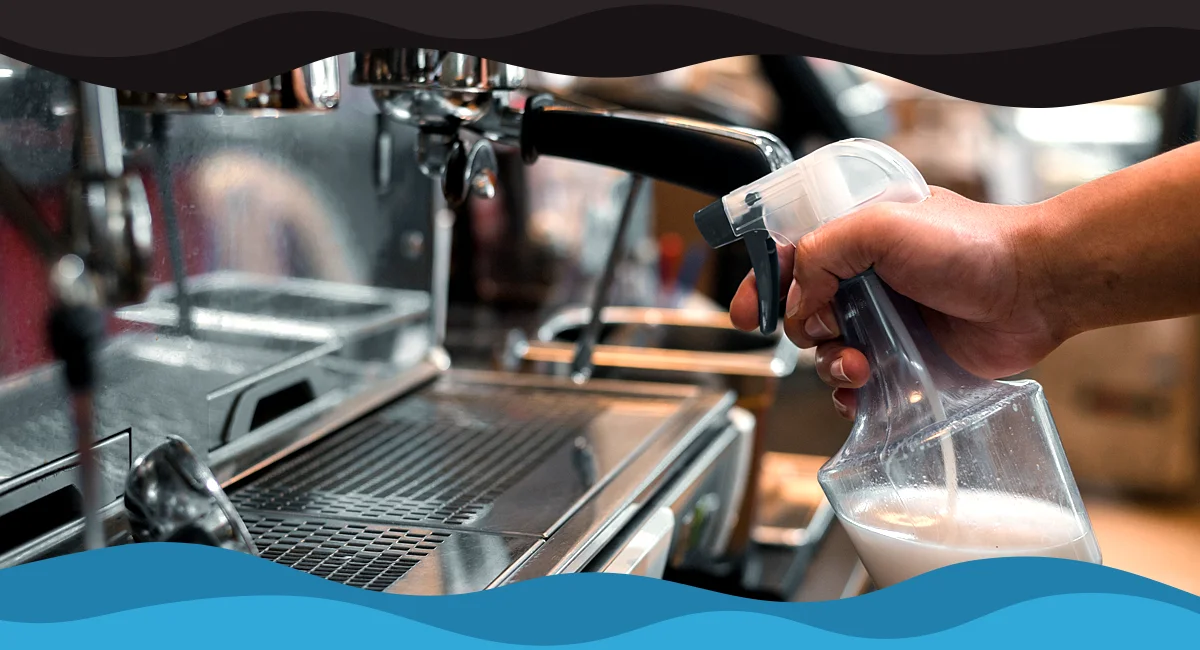
If your machine dispenses milk automatically through an integrated circuit, that circuit needs attention after every service session. Milk proteins and fats clog narrow tubing quickly and create a hygiene risk if left.
Most machines prompt an automatic milk rinse; do not skip it. For a deeper clean, many manufacturers recommend running a dedicated milk-system cleaning fluid through the circuit weekly to remove biofilm and protein deposits. Wipe any external milk spout or nozzle after every use.
Descaling a Bean-to-Cup Machine
The same hard-water rules apply as with espresso machines. In hard-water areas, treat monthly descaling as your baseline and adjust from there. Most bean-to-cup machines have a built-in descale prompt based on water usage, and it's recommended to follow that guidance rather than improvising.
Use a descaler compatible with your machine, since some manufacturers specify their own product and using an incompatible one can void the warranty. Rinse thoroughly before serving.
Building a Simple Cleaning Routine
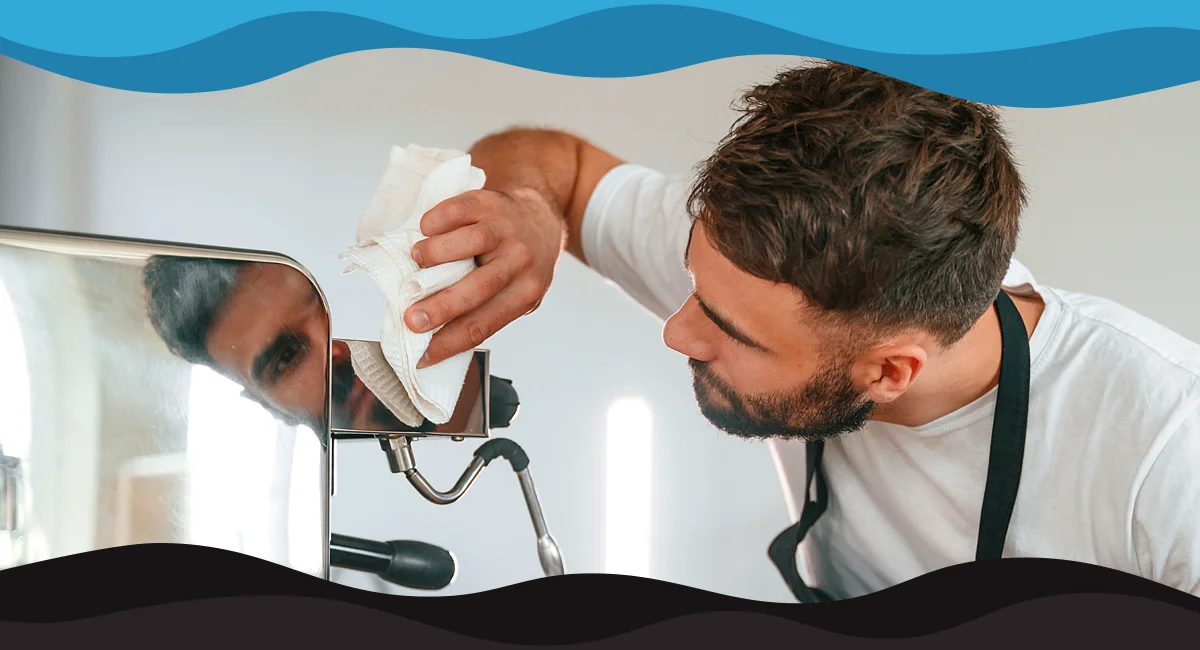
A workable routine breaks tasks into daily, weekly and periodic jobs. That way nothing slips and no single shift carries the whole load.
Task
Frequency
Backflush each group with plain water throughout service; backflush with detergent (approx. 3 g per group) at close, following your machine maker's recommended frequency
Daily
Wipe the steam wand after every use and purge it
Daily
Empty and rinse the drip tray
Daily
Brush the group heads
Daily
Wipe down surfaces with a food-safe sanitiser
Daily
Run automatic cleaning cycle on bean-to-cup machines and rinse the milk circuit
Daily
Remove and rinse the brew unit (bean-to-cup)
Daily
Soak portafilters, baskets and blind filters in detergent solution to lift built-up oil
Weekly
Clean the grinder with cleaning tablets
Weekly
Check and wipe the hopper
Weekly
Inspect gaskets for wear
Weekly
Run milk-system cleaning fluid through bean-to-cup milk circuit
Weekly
Descale on a schedule matched to your water hardness — roughly monthly in hard-water areas
Periodic
Replace worn group gaskets and shower screens
Periodic
Change water filter cartridges before they expire
Periodic
Deep-clean drainage and waste trays
Periodic
Write the routine on a laminated card near the machine and tick it off. New staff learn faster, and inspectors like to see a documented system.
When Cleaning Isn't Enough: Professional Servicing
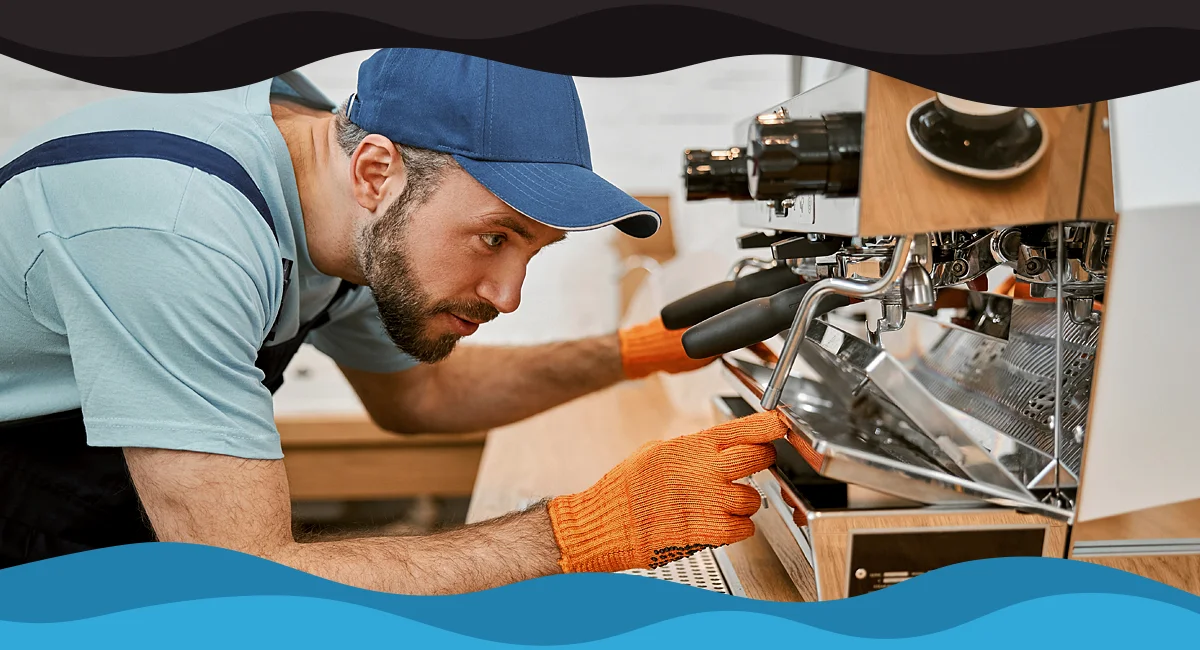
A solid cleaning routine handles day-to-day build-up, but it won't catch everything. Internal seals wear out, boiler elements degrade and pressure systems drift over time. These types of issues are ones that often only a trained engineer can diagnose and fix.
Most manufacturers recommend a professional service at least once a year, or more frequently for high-volume sites. Scheduling a regular service alongside your cleaning routine helps catch small problems before they become expensive breakdowns, and keeps your machine running within the manufacturer's warranty terms.
Stocking Up Without Overbuying
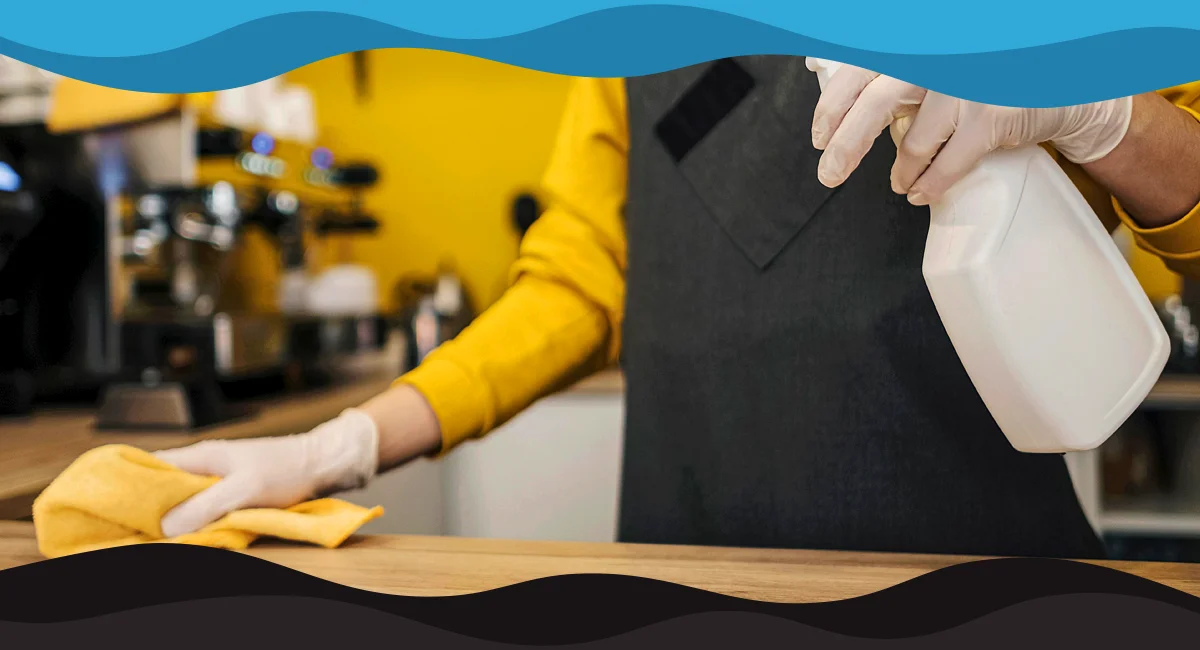
It can be tempting to overbuy cleaning products for your commercial coffee machine, but in practice a small, focused kit covers the machine itself:
-
Espresso machine detergent powder for backflushing and soaking
-
Bean-to-cup cleaning tablets compatible with your machine
-
Milk-circuit cleaning fluid for automatic milk systems
-
A descaler suited to your machine, or a water filter to reduce how often you need it
-
Grinder cleaning tablets
-
A group head brush and a set of colour-coded microfibre cloths
-
Food-safe surface sanitiser and blind filters in the right size for your portafilter
How much of each you need depends on your sales volume. A busy café gets through detergent and cloths fast, so larger quantities make sense and bring the cost per clean down.
If you run a quieter site, smaller packs that stay in date are a better bet. Whichever products you choose, make sure anything used in a food area carries the correct safety data and food-contact approval as inspectors will expect to see it, and your staff need to know what they are handling.
Beyond Your Machine: General Café Cleaning Essentials
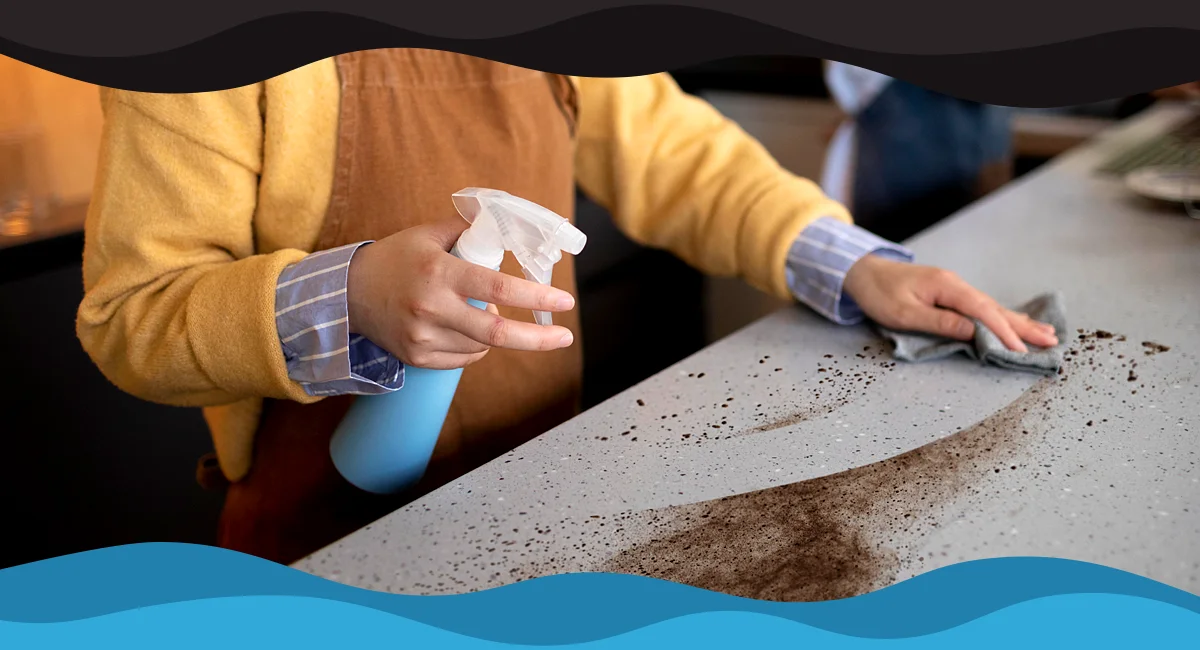
A coffee setup doesn't end at the group head. The counter, the knock box area, milk jugs, tamping stations and customer-facing surfaces all need regular attention, and using the right products here matters just as much for hygiene scores and customer perception.
-
Food-safe surface sanitiser: For counters, tamping mats and any prep area. Choose a spray or concentrate that is approved for food-contact surfaces so you can clean without a full rinse-down every time.
-
Washing-up liquid and a dedicated sink: For milk jugs, drip trays, spoons and dosing cups. Keep these separate from any machine-specific detergents; standard catering-grade washing-up liquid is fine for hand-washed accessories.
-
Colour-coded cloths and sponges: Assign colours by task (e.g. blue for general surfaces, red for floor spills, green for milk jugs) to avoid cross-contamination. Replace them regularly.
-
Hand soap and sanitiser: Mounted at every wash station. Staff handling portafilters, milk and cups need to clean their hands often, and an inspector will check.
-
Floor cleaner and a non-slip mop: Coffee bars generate spills constantly. A catering-grade floor cleaner keeps tiles safe and hygienic, especially around the machine and knock box.
-
Bin liners and waste management supplies: Used grounds, milk cartons and cleaning cloths build up fast. Lined bins emptied at least daily keep smells and pests under control.
None of these are expensive, but having them stocked and accessible means your team can keep the whole bar clean, not just the machine.

Get Your Café Cleaning Kit Right
The right café cleaning supplies protect your investment in good coffee and keep every cup tasting the way it should. Build a focused kit based on what you actually need, implement a schedule of daily, weekly, and less frequent tasks, and match your descaling routine to your local water hardness.
At Puregusto we stock all the detergents, descalers, brushes and cloths you need to keep your commercial espresso or bean-to-cup machine running smoothly. We also supply everything from award-winning wholesale coffee beans to the latest commercial coffee machines, and all the sundries coffee businesses rely on. Shop our cleaning supplies and build your kit in one order, or get in touch with our coffee experts if you need help finding the right products.
Frequently Asked Questions
