The Psychology of Coffee:
Why People Love It and
What That Means for
Your Menu
If you run a coffee business in the UK, understanding why customers feel attached to coffee is one of the most commercially useful things you can know. But it's also something that a lot of operators never actually sit down and think about. Coffee shop menu psychology is not simply about listing products and prices. For most people, coffee carries real emotional weight: it marks the start of the day, signals a break from work, or creates the conditions for a meaningful conversation.
When you understand why people reach for their cup, you can build a menu that speaks to those motivations rather than just listing products and prices, and deliver a coffee experience that customers want to return to again and again.
Key Takeaways
-
Coffee consumption is driven by ritual, identity, social connection, and reward rather than caffeine alone
-
Menu language, product design, and café atmosphere all influence purchasing behaviour
-
Small, psychology-informed tweaks can increase average spend, repeat visits, and customer loyalty
The Science Behind Why We Love Coffee
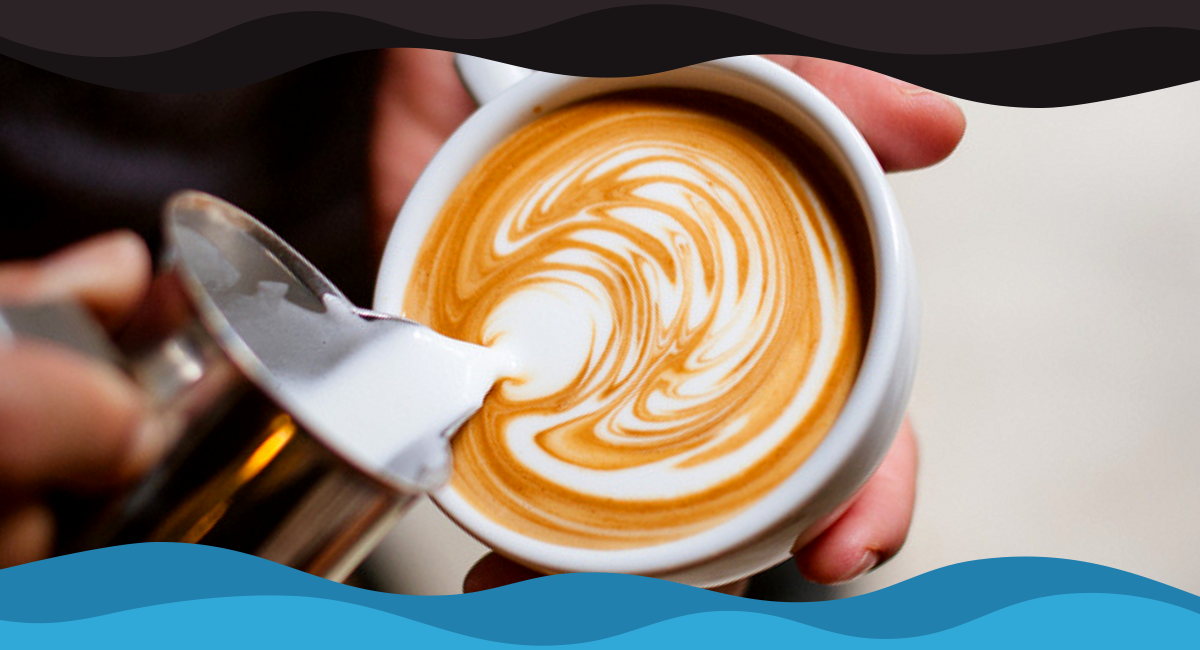
Coffee's hold on people is partly neurochemical and partly cultural. Caffeine blocks adenosine receptors in the brain, which reduces the perception of fatigue and increases dopamine activity; a mechanism well documented in pharmacological research. But that neurological reward only explains a fraction of the attachment people develop.
Habit formation plays an equally important role. Research on cue-routine-reward loops, originally described by Ann Graybiel at MIT and later popularised through behavioural science literature, shows that repeated behaviours in consistent contexts become deeply ingrained. Morning coffee fits this model precisely: the alarm goes off, the kettle boils, or the café door opens, and the brain begins anticipating reward before the first sip. Over time, it is not just the drink that is satisfying, but the ritual itself.
The UK coffee shop market reflects this attachment at scale, with both the branded and independent sectors having grown consistently over the past decade. The sector now accounts for tens of thousands of outlets, with consumers visiting multiple times per week; figures that point to habit, not novelty, as the primary commercial driver.
There is also a strong sensory dimension. Studies in flavour perception show that aroma accounts for a significant proportion of how we experience taste. Coffee's volatile aromatic compounds (over 800 have been identified) trigger responses in the limbic system, the part of the brain most associated with emotion and memory.
This is a practical argument for grinding beans fresh in-store: the aromatic release is immediate, and the sensory impact on arriving customers is measurable, before they have even placed an order. It is also why the smell of freshly brewed coffee can lift your mood before you've even consumed a single drop.
The Psychological Drivers Your Menu Can Tap Into
The science explains the attachment, but the real commercial value is in understanding the specific psychological triggers that shape what people order and why they come back. Each of the following drivers can be addressed directly through your menu design, language, and product range.
The Ritual Effect: Comfort in Consistency
People rely on their morning coffee to anchor the day. For many, the specific drink (whether it's a flat white with oat milk, or a double espresso in a particular cup) is as much about predictability as it is about taste. The ritual creates a stable starting point from which the rest of the day proceeds: a fixed, predictable moment that gives the brain one less decision to process.
For coffee businesses, this has a clear implication. It means that consistency matters more than novelty for your core offering. If a customer's go-to drink changes slightly every visit, whether it's a different strength, a different temperature, or a slightly different ratio, the sense of comfort breaks.
That's why it's important to aim for consistency when choosing wholesale coffee beans, and to train your team to a standard and communicate that standard on your menu by naming and describing house favourites clearly.
Loyalty programmes reinforce this loop directly. Rewarding repeat visits with a free drink or discount gives customers an additional reason to make your café part of their daily rhythm, rather than a one-off stop.
The Social Side: Connection Over a Cup
Coffee is one of the few beverages that functions as a social object. It is the excuse to meet, the thing you offer a colleague, the prop for a first date. Research in social psychology consistently identifies shared rituals as bonding mechanisms, and sharing a drink is one of the oldest. For example, in the UK, non-dairy milk adoption rates among café customers have risen sharply in recent years, reflecting how personalised, socially visible choices around coffee have become embedded in everyday identity and shared experience.
Your menu can acknowledge this. Paired pricing (such as "coffee for two" offers or a latte and pastry deal for a set price) reduces the friction of buying for someone else and frames your café as a place worth sharing. This is about positioning your business as one that helps customers to achieve the social purpose of their visit.
Coffee Shop Menu Psychology and Personal Identity
Coffee choice has become a genuine expression of self-image. Someone who orders a single-origin pour-over is communicating something about their values. Someone who specifies oat milk, no syrup, extra shot is exercising control and demonstrating knowledge. This phenomenon of using consumption choices to signal identity is well established in consumer psychology, and coffee is one of the clearest examples.
Your menu language should speak to this. Words like "artisanal," "organic," "single origin," and "plant-powered" are not just descriptors; they give customers vocabulary to align their order with their self-perception. Customisation options such as the choice of milk alternatives, syrups, and shot strength increase satisfaction because they allow ownership of the drink. The customer is not just buying from you; they are creating something that is theirs.
The Reward Loop: Small Pleasures and the Feel-Good Factor
Caffeine is a stimulant, but research suggests the psychological anticipation of a coffee break is often as rewarding as the drink itself. This anticipatory reward is part of why "treat" add-ons perform so well in coffee shops. A brownie alongside a latte, a flavoured syrup upgrade, a choice of whipped cream; these are small indulgences that feel proportionate and manageable, triggering the same neural reward circuitry without the guilt of a larger purchase.
Menu design can make this easy. Upsell prompts that are framed as upgrades rather than extras ("make it a large for 50p") feel less like a sales technique and more like an invitation. Pairing suggestions like "goes well with our almond croissant" remove decision fatigue and increase basket size simultaneously.
Nostalgia and Emotional Flavours
Certain flavours carry emotional associations that go beyond taste. For example, cinnamon is linked to festivity and warmth. Hazelnut triggers memories of childhood sweets for many adults. Vanilla is broadly associated with comfort.
These associations are not arbitrary, they are built through years of repeated experience and reinforced by seasonal and cultural context.
Limited-edition drinks made using seasonal coffee syrups exploit this mechanism effectively. A "Cosy Winter Blend" or a spiced latte available only in November creates both emotional resonance and urgency. Framing drinks around moods or moments, rather than just ingredients, invites customers to choose based on how they want to feel, which is usually a more powerful motivator than how something is made.
Practical Steps To Improve Your Menu Design
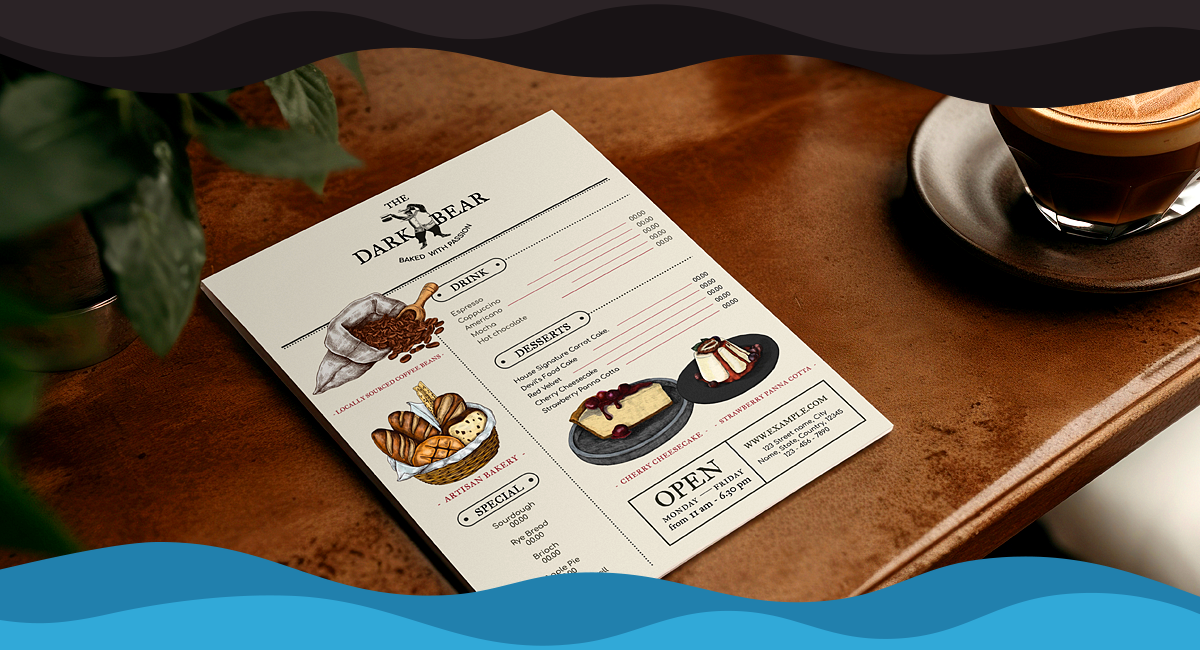
A few straightforward adjustments can make a real difference to how customers engage with your menu.
1. Lead with your house favourites
Give your most consistent, popular drinks prominent placement and clear descriptors. This serves customers who want reliability and sets a quality benchmark. Customers drawn by ritual need to find their go-to drink immediately, but burying it mid-menu creates friction that erodes the sense of comfort they are seeking.
2. Add identity language
Review your current menu copy. If it only lists ingredients, you are missing the opportunity to connect with values. Add one or two identity-relevant descriptors where genuine. A single well-chosen phrase, such as "single-origin, ethically sourced," for example, can shift how a customer perceives the entire menu.
3. Use a decoy to steer size choices
The "decoy effect" (asymmetric dominance) is one of the most replicated findings in behavioural economics. If you offer three sizes where the medium is priced close to the large, the large suddenly looks like better value and uptake increases. This is a menu architecture choice that enables you to control perception, and in turn decision making, without cutting margin.
4. Build a simple customisation structure
Milk alternatives, syrups, and shot options do not need to be complex. A short, clear list of add-ons gives customers agency without overwhelming them. Research consistently shows that even minor personalisation increases perceived value and satisfaction because the act of choosing makes the drink feel more theirs.
5. Introduce at least one seasonal item
Even a single limited-run drink, framed around a season or mood, creates novelty, social sharing, and return visits from customers who want to try it before it goes. Seasonal specials also generate organic social media content. Customers photograph and share them, providing unpaid promotion that a permanent menu item can't always achieve in the same way.
6. Design a loyalty mechanic that reinforces the ritual
A stamp card or app-based reward that tracks daily visits works with the habit loop, not against it. Make the reward attainable quickly: psychologists note that early progress on a reward scheme increases completion rates significantly. Even printing two pre-stamped marks on a ten-stamp card has been shown to improve follow-through.
FAQs
At Puregusto, we provide coffee businesses across the UK with award-winning coffee beans, syrups, equipment, and wholesale supplies designed to support the kind of menu that keeps customers coming back. Whether you are rethinking your seasonal offer or sourcing a more consistent house espresso, our collection is built around quality that holds up cup after cup. Get in touch with our team to discuss what your menu needs.
