How To Taste Coffee Like a Pro: Acidity, Body & Balance Explained |
 Print this page Print this page
|
How To Taste
Coffee Like a Pro:
Acidity, Body &
Balance Explained
If you love coffee, you’ve probably noticed that some cups taste bright and lively, others feel rich and heavy, and some are just beautifully smooth. That’s the result of a few key flavour elements working together. The secret to understanding them (and choosing better coffee because of it) is learning how to taste with intention rather than just drinking on autopilot.
Whether you run a café, work behind the machine, or simply brew at home, getting to grips with how coffee should taste makes everything easier; from picking the right beans to dialling in a new brew.
Key Takeaways
-
Tasting coffee intentionally helps you understand flavour structure and make better decisions when choosing or brewing coffee.
-
Acidity, body, and balance are the three core elements professionals focus on first, and they’re the easiest place to start building your palate.
-
Most of a coffee’s flavour comes from the bean itself (origin, variety, altitude, processing), while brewing shapes the final 20% of what you taste.
-
Use the four steps of tasting (smell, taste, locate, describe) to evaluate any coffee consistently, whether you’re cupping or brewing at home.
-
You can quickly improve your palate by tasting coffees side by side, exploring different brew methods, and building a simple flavour vocabulary.
In this guide, we’ll break down the three things the pros focus on first: acidity, body, and balance. We’ll also provide practical tips for how to taste coffee and understand what you’re tasting and why. Once you know how to spot them, you’ll start noticing flavour in a completely new way.

Why Coffee Tasting Is a Valuable Skill
Most people drink coffee without really thinking about why it tastes the way it does. Professionals, however, approach every cup with a bit more curiosity. Rather than simply deciding if they like the coffee they’re drinking, they’re identifying what exactly they’re tasting and why it tastes that way.
Learning to taste with intent is what separates day-to-day drinking from true coffee understanding.
Drinking vs. Tasting With Intent
When you taste intentionally, you slow down and pay attention to the elements that make up flavour: acidity, sweetness, bitterness, body, aftertaste, and overall balance.
You start recognising patterns like why one coffee is zingy and fruity, why another tastes chocolatey and smooth, and why two coffees brewed from the same bag can taste completely different. It’s a simple shift, but it changes everything.
Why This Matters for Coffee Businesses
For baristas, solid tasting skills translate directly into better decisions and better coffee:
-
Smarter bean selection: It’s easier to choose coffees that fit your menu or customer base.
-
More consistent brews: When you can identify what’s “off,” you can fix it faster.
-
Better team training: A shared flavour vocabulary helps everyone dial in the same way.
-
More confident customer conversations: Staff can explain flavour notes clearly without sounding scripted.
Why It Helps Home Brewers Too
Even if you’re brewing at home, tasting skills help you figure out:
-
Why you prefer certain coffees over others.
-
How to identify coffee that best suits your preferences.
-
How to tweak your grind or brew method to bring out the flavours you enjoy.
-
Whether a coffee is naturally bright, bold, smooth, or rich before you even add milk.
The Three Cornerstones of Coffee Flavour
To keep things simple, this guide focuses on the three sensory pillars the pros pay attention to first:
-
Acidity
-
Body
-
Balance
Once you can identify these, you’ve already taken a big step toward tasting like a professional.
The 80/20 Rule of Coffee Flavour
A helpful way to understand coffee tasting is through the 80/20 rule:
-
Around 80% of a coffee’s flavour comes from the bean itself; its origin, variety, altitude, and processing.
-
The remaining 20% of a coffee’s flavour comes from how you brew it.
In other words, most of what you’re tasting is created long before the coffee reaches your grinder. Soil conditions, climate, farming practices, and post-harvest processing all have a huge impact on acidity, body, sweetness, and aroma. Brewing then acts as the final layer that brings those flavours to life (or, if done poorly, masks them).
This is why two coffees from different origins can taste worlds apart, even when brewed identically, and why the same beans can taste dramatically different when roasted or sourced differently. Brewing is important, but it refines the flavour; it doesn’t create it.
This rule highlights one key takeaway: choosing the right coffee beans is the biggest factor in achieving the flavour you want. Brewing technique is simply how you reveal it.

Understanding Acidity in Coffee
Acidity is one of the most misunderstood elements of coffee. Many people hear the word and think it means sour, but in coffee, acidity is actually a good thing. It’s what gives a cup its brightness, liveliness, and character.
Think of acidity as the spark that makes certain coffees taste vibrant rather than flat.
What Acidity Actually Is (and Isn’t)
In coffee tasting, acidity refers to the crisp, bright sensation you feel at the front of your tongue. It might remind you of citrus, fresh fruit, or even a juicy apple-like tang.
It’s not the same as sourness, which is what happens when extraction is off or a coffee is underdeveloped. That can taste sharp, unpleasant, and unbalanced. But good acidity is clean, refreshing, and an essential part of specialty coffee.
How Acidity Tastes
You’ll often notice acidity in coffee as:
-
Citrusy notes like lemon, lime, or orange.
-
Fruity notes such as apple, berry, or stone fruit.
-
Wine-like or sparkling sensations.
-
A feeling of freshness as you sip
Some coffees have a soft, gentle acidity; others are bright and expressive.
Where Acidity Comes From
A coffee’s acidity is shaped long before it reaches the cup. Several natural and processing factors influence it, and roasting plays a major role too. Factors include:
-
Origin: Coffees from certain locations like Ethiopia, Kenya, Colombia tend to be brighter.
-
Altitude: Higher growing altitude means slower bean development and more complex acidity.
-
Processing method: Washed coffees usually taste cleaner and brighter; naturals can be fruitier but softer.
-
Roast level: Lighter roasts preserve acidity; darker roasts mute it.
-
Roasting method: Different roasting technologies influence how acidity is expressed. For example, convection roasting tends to produce a cleaner, more transparent acidity because the heat transfer is even and controlled.
Types of Acidity
You might hear professionals refer to specific types of acidity. You don’t need to memorise these, but knowing them helps explain what you’re tasting.
Acidity Type
Tastes Like
Citric acidity
Lemon, orange, grapefruit
Malic acidity
Apple, pear
Tartaric acidity
Citric acidity
Phosphoric acidity
Sparkling, champagne-like brightness
When Acidity Is Desirable
Acidity is one of the most celebrated qualities in specialty coffee, especially in lighter roasts and single-origin coffees where the goal is to showcase the bean’s natural character. You’ll find it most prominently in many African coffees, which are prized for their bright, fruit-forward profiles, and in high-altitude coffees that naturally develop complex, elegant acidity.
It’s also a key feature in filter brewing, where clarity and nuance shine through more than they do in espresso. While acidity needs to be carefully balanced in espresso to avoid becoming sharp or overpowering, when it’s handled well it adds depth, complexity, and a refreshing lift to the cup.

Understanding Body in Coffee
If acidity is the spark in coffee, body is the texture. It’s what gives a coffee its physical presence, which means the weight, fullness, or richness you feel as it sits on your tongue. Even people who don’t think much about flavour often notice body because it affects how satisfying or indulgent a coffee feels.
What Body Means in Coffee Tasting
In simple terms, body describes the mouthfeel of a coffee: how heavy, thick, smooth, or light it feels when you drink it. A light-bodied coffee might remind you a little bit of tea; clean, delicate, and slightly watery. Meanwhile a full-bodied coffee feels creamy or syrupy, with more heft and richness. Neither is necessarily better, they just suit different styles of coffee and different preferences.
How Body Presents in the Cup
Body is usually described to communicate where it sits on a scale from light to full, and there are a few main phrases you’ll come across:
-
Light body: Clean, refreshing, tea-like.
-
Medium body: Smooth, rounded, balanced.
-
Full body: Creamy, heavy, sometimes almost oily or syrupy
You can often feel body, most clearly by holding the coffee on your tongue for a moment or by focusing on the lingering texture after you swallow.
What Influences Body
Several factors play a role in how much body a coffee develops:
Bean variety
Some varieties naturally produce heavier or lighter-bodied coffees.
Processing method
Naturals and honey-process coffees often have more body; washed coffees lean cleaner and lighter.
Roast level
Darker roasts tend to feel fuller and heavier, while lighter roasts maintain a cleaner, lighter mouthfeel.
Brew method
Brewing actually has a huge impact on body, and if you’ve ever wondered why the same coffee can feel completely different when it’s brewed two ways, body is often the reason:
-
Immersion methods (like French press or Aeropress) typically yield a fuller body.
-
Paper-filter methods (like pour-over) remove more oils and fine particles, creating a lighter, cleaner body.
-
Espresso produces an intense, full-bodied cup because of high pressure and concentrated extraction.
When Body Matters
Body becomes especially important in drinks where texture plays a starring role. For example, milk-based café drinks such as flat whites, lattes, cappuccinos usually benefit from coffees with medium to full body, so the coffee flavour can stand up to the milk. Likewise, rich, indulgent blends often aim for fuller body to create a more comforting, satisfying mouthfeel.
On the other end of the spectrum, a light-bodied coffee can be perfect for filter brews where clarity and subtlety are the goal.
Examples of Body
-
Sumatran coffees are known for their deep, heavy, almost syrupy body.
-
Brazilian coffees often offer a round, smooth, medium-to-full body.
-
Light-roast Ethiopian coffees tend to have a much lighter body, showcasing clarity and floral notes instead of richness.

Understanding Balance in Coffee
We’ve already described acidity as the spark in coffee, and body as the texture. Well, balance is the harmony that brings everything together.
It’s what makes a coffee feel complete; nothing too sharp, nothing too heavy, nothing out of place. A well-balanced coffee isn’t necessarily the boldest or most expressive, but it’s often the one people can drink all day without getting tired of it.
What Balance Really Means
Balance is the relationship between a coffee’s main flavour elements: acidity, sweetness, bitterness, body, and aftertaste.
When none of these dominates and everything feels smooth and cohesive, the coffee is considered well balanced. It’s about each part supporting the others so the cup feels stable and enjoyable from start to finish.
How to Identify Balance
If you take a sip and nothing jumps out as “too much,” that’s usually a sign of good balance. A balanced coffee often has:
-
Sumatran coffees are known for their deep, heavy, almost syrupy body.
-
Brazilian coffees often offer a round, smooth, medium-to-full body.
-
Bitterness that supports rather than overwhelms.
-
A mouthfeel that matches the flavours.
-
A finish that feels clean and consistent.
What Influences Balance
Balance is shaped by several factors, both before and during brewing:
Roast development
Skilled roasters adjust time and temperature to ensure acidity, sweetness, and bitterness sit in the right place. Under-roasted coffee can taste sharp and thin; over-roasted can taste bitter and flat.
Blend composition
Many coffee blends, particularly those intended for everyday use or “house” coffees are built around balance by combining beans with different strengths. That makes the final cup smooth, consistent, and crowd-pleasing.
Brew precision
People often talk about extraction levels when making coffee. Essentially this describes the amount of coffee that is extracted from the beans into the water.
-
Under-extracted coffee tastes sour, thin, and unbalanced.
-
Over-extracted coffee tastes bitter, hollow, or harsh.
-
Well-extracted coffee brings all elements into alignment.
Dialling in espresso is essentially a daily exercise in chasing balance.
When Balance Is Desirable
Balanced coffees are particularly valued in settings where you want something reliable, versatile, and easy-drinking. That’s why many cafés use balanced blends for espresso; these coffees taste great on their own but also pair well with milk.
For batch brew or everyday filter coffee, balance helps create a cup that feels familiar, smooth, and enjoyable for a wide range of customers.

Coffee Tasting Tips: How to Train Your Palate
You don’t need special equipment or professional training to start tasting coffee like a pro. What you do need is a little structure, curiosity, and the willingness to slow down for a moment.
Here are some simple but incredibly effective ways to build a more confident, consistent palate.
1. Use the Four Steps of Coffee Tasting
Professional tasters often follow a simple four-step process that anyone can use. It keeps tasting structured, consistent, and easy to repeat.
?Step 1. Smell: Before you taste, take in the aroma. Smell the dry grounds, then smell again once the coffee is brewed. Aroma prepares your palate and gives you early hints about the flavours to come, whether that’s floral, fruity, nutty, spiced, or sweet.
?Step 2. Taste: Take a sip and let the coffee spread across your tongue. Focus on the initial sensations: acidity, sweetness, texture, and intensity. Don’t overthink it, just notice what stands out.
?Step 3. Locate: Pay attention to where you feel different sensations on your palate. Acidity often shows up at the front of the tongue while sweetness tends to settle in the middle. Bitterness leans toward the back and body is felt throughout as weight or texture.
?Step 4. Describe: Now put it into words. Start simple: bright, smooth, heavy, mellow, sweet. As your palate develops, you can get more specific: citrusy acidity, syrupy body, chocolatey finish, and so on. The goal isn’t poetry; it’s clarity.
2. Build a Sensory Vocabulary
A big part of tasting is simply having the words to describe what you’re experiencing. Tools like the coffee flavour wheel can help, but you don’t need to get overly technical. Start with what you know.
Think in broad categories at first, such as:
-
Fruity
-
Nutty
-
Chocolatey
-
Floral
-
Spicy
-
Sweet
-
Bright
-
Rich
As you get more comfortable, you can get specific. “Berry-like acidity” or “silky medium body” becomes easier to recognise the more you taste.
3. Taste Objectively (Not Just What You Prefer)
One of the biggest shifts in professional tasting is learning to separate “Do I like this?” from “What am I tasting?”.
You might personally prefer chocolatey, low-acidity coffees, but you can still recognise when a bright, fruity one is high quality.
This mindset lets you evaluate coffee more fairly, and it’s especially valuable for professionals choosing beans for a diverse customer base when designing their menus.
4. Taste the Same Coffee in Different Ways
Changing the brew method can completely transform how a coffee tastes. Try brewing the same beans using:
-
Pour-over
-
French press
-
Espresso machine
-
Aeropress
-
Cold brew
You’ll notice huge shifts in body, sweetness, and acidity. This helps you understand the coffee more deeply — and makes you a better brewer overall.
5. Use Reference Tastes to Train Accuracy
One of the simplest ways to sharpen your palate is to use everyday flavours as calibration tools. Professional tasters often start a session by tasting small amounts of sugar water to remind themselves what clean sweetness feels like on the tongue.
They might then try a little lemon water to reset their sense of acidity, or even a very weak salt solution to help identify savoury elements and understand how balance works.
These quick reference points act like anchors for your senses. Once you’ve reminded your palate what these basic tastes feel like in isolation, it becomes much easier to pick up on subtle shifts in sweetness, acidity, or balance when you move back to tasting coffee.
6. Keep a Coffee Journal
This doesn’t need to be complex. Just jot down things like:
-
What you liked
-
What you tasted
-
How the acidity, body, and balance felt
-
How you brewed it
Over time, patterns start to emerge. You’ll discover which origins, roast levels, and profiles you prefer, and be able to identify why you prefer them.
7. Taste Without Additions First
Milk and sugar can make coffee delicious, but they also mask acidity and body. Try the coffee black first to understand its natural character, then add milk or sweetener afterwards if that’s how you usually drink it. This simple step helps your palate develop much faster.

Practical Coffee Tasting Exercises
Understanding the theory behind coffee tasting is all well and good, but getting your senses involved will really help to hone your skills. These simple exercises help you experience acidity, body, and balance in a clear, memorable way. They’re perfect for barista training, café team calibration, or anyone at home who wants to taste coffee more intentionally.
1. Compare High-Acidity vs. Low-Acidity Coffees
Choose two contrasting coffees, for example a washed Ethiopian and a Brazilian natural. Brew them the same way, then taste them side by side.
Focus on the feeling at the front of your tongue, the brightness, and the overall energy of the cup. This exercise makes acidity incredibly easy to recognise, even for beginners.
You’ll quickly notice how different acidity levels influence freshness, clarity, and perceived sweetness.
2. Brew Method Body Comparison
Take the same coffee and brew it using two very different methods: French press and espresso. This creates an immediate, unmistakable contrast in body.
The French press, being an immersion brew with no paper filter, produces a cup that feels fuller, rounder, and more textured, with more oils and fine particles remaining in the brew.
Espresso, on the other hand, is brewed under high pressure and produces a dense, concentrated shot with a thick, creamy mouthfeel and rich viscosity, but in a much smaller volume.
Tasting these side by side shows just how dramatically the brewing method influences body. It’s a powerful training exercise for cafés because it helps teams understand why some coffees shine in certain brew methods but not others, and why body can change so noticeably between immersion, filtration, and high-pressure extraction.
3. Roast Level Comparison
If you have access to the same coffee roasted at different levels (for example light vs. medium vs. dark) this is an excellent way to understand how roast influences flavour. Lighter roasts will show more acidity and clarity, while darker roasts will feel fuller, sweeter, and sometimes more bitter.
This helps you to understand why a single-origin coffee might shine at a lighter roast, while blends often benefit from a slightly deeper profile.
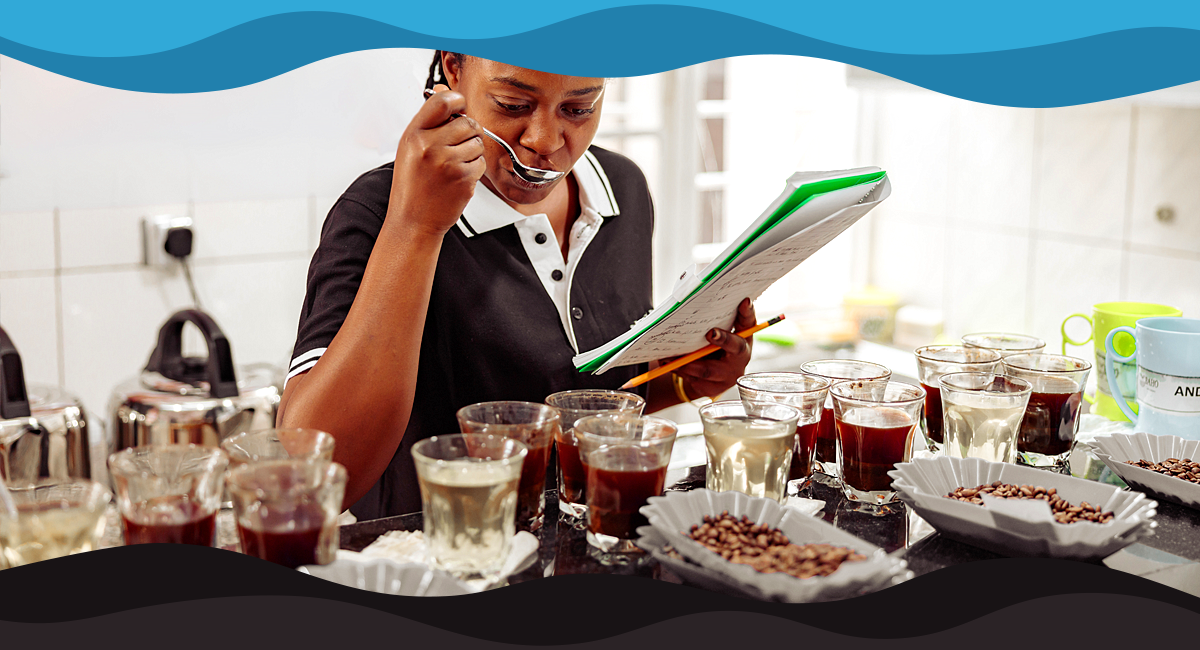
4. Run a Mini Cupping Session
A cupping session is the industry’s standard way of evaluating coffee, and it’s surprisingly easy to recreate on a small scale. All you need is:
-
Several cups or bowls
-
Hot water
-
Ground coffee
-
Spoons
Brew all coffees with the same ratio and let everyone taste them in a consistent order. Encourage slurping, it helps spread the coffee across your palate and opens up the aromas.
This is a fun and highly effective team exercise, and it helps everyone build a shared vocabulary. If you operate a cafe or coffee shop, this will help your staff to be more confident in discussing the different coffees on your menu with customers, providing recommendations, and help position your business as one with expertise.
5. Taste for Aftertaste and Balance
Choose one coffee you know well and drink it slowly. Pay attention to what happens after you swallow:
-
Does the flavour linger?
-
Is it pleasant or harsh?
-
Does the aftertaste match the first sip or change over time?
-
Do acidity, sweetness, and bitterness feel aligned?

Coffee Tasting FAQs
Ready to Explore More Coffee?
Tasting coffee with intention opens up a whole new level of understanding. By paying attention to things like acidity, body, and balance, you start to recognise what makes each coffee unique, why certain flavours resonate, and how small changes in brewing can completely transform a cup.
If you’d like help finding coffees that match the profiles you enjoy, we’re always happy to point you in the right direction. At PureGusto we supply an award-winning range of expertly roasted coffees, from characterful single origins to carefully crafted blends designed for both espresso and filter.
Feel free to get in touch to chat about coffee, or explore our full coffee range to discover something new.